
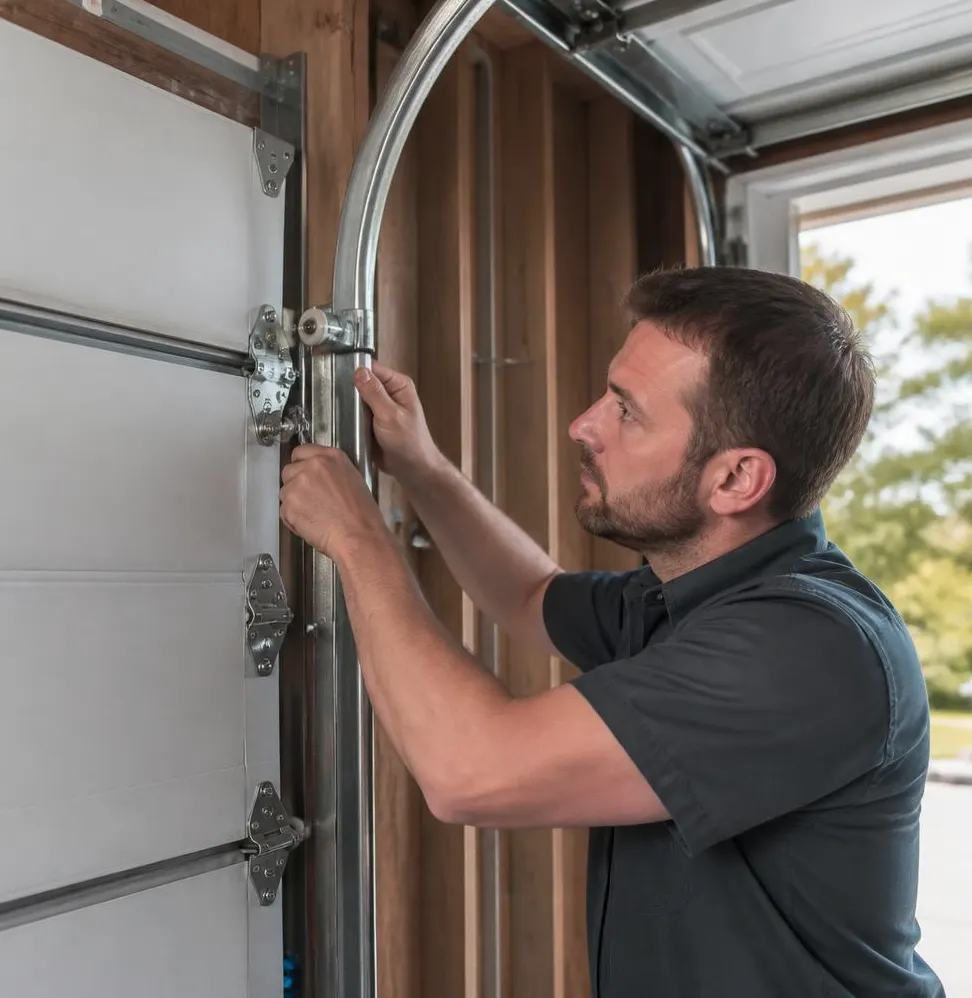
The Short Answer
A garage door that isn't balanced, properly sealed, and structurally sound is usually the first part of a house to fail when a severe storm front pushes through. When it fails, wind pressure gets inside the garage and pushes outward on the roof and walls, turning a dented panel into roof and wall damage. Checking your door's hardware, seals, and reinforcement now, before the next round of fall storms, is a quick job. Dealing with what happens after a door blows in is not.
Why the Garage Door Is a Home's Weakest Wall
Every other opening in a house — windows, doors, vents — is small. The garage door is often the single largest opening in the entire structure, and it's built from lightweight panels, thin tracks, and rollers rather than the framing and sheathing that make up the rest of the wall. When wind hits a closed house, pressure builds against every surface. If the garage door buckles or blows off its tracks, that pressure suddenly has a way inside, and it pushes up on the roof deck and out on the walls from the inside, which is a much more destructive load than the wind hitting the outside alone. A door that's already loose on its rollers, out of balance, or held by worn hardware doesn't need a hurricane to fail — a strong straight-line wind gust is enough.
What Fall Storm Season Actually Brings Here
Central Texas doesn't get a quiet fall. The sudden severe storms that roll through Buda, Kyle, San Marcos, Dripping Springs, and the rest of this area don't stick to spring — they show up with little warning through the fall months too, often bringing straight-line wind gusts, hail, and a wall of dust ahead of the front. That combination is hard on a garage door in a few specific ways:
- Hail dents thin steel panels and can crack fiberglass ones, especially on doors that are already a few years old.
- Wind gusts load up the panels and tracks sideways, testing balance, roller condition, and anchoring all at once.
- Dust and grit work their way into tracks and rollers ahead of a storm, drying out lubrication and making the door bind right when you need it to move smoothly.
None of this requires a named storm. An ordinary fall cold front moving through can bring all three in the same afternoon.
What to Inspect Before the Next Front Moves Through
Tracks and Rollers
Walk the full length of each track and look for bends, gaps where the track has pulled away from the frame, or debris buildup. Rollers that are cracked, flat-spotted, or visibly worn should be replaced before a wind event, not after one strains them further.
Spring Balance
Disconnect the opener and lift the door halfway by hand. It should stay in place. If it drifts up or crashes down, the springs are out of balance, and an unbalanced door is more likely to rack sideways and jump its tracks under wind load.
Panels and End Stiles
Look closely at the vertical edges of each panel (the end stiles) for hairline cracks or soft spots, and check for old hail dents that have thinned the metal. A door with several seasons of hail damage already has less structural reserve left for the next storm.
Weatherstripping and Bottom Seal
A cracked or missing bottom seal lets wind-driven rain and dust push straight under the door, and a worn seal often means the door isn't seating evenly, which also affects how well it resists lateral wind pressure.
Opener and Manual Release
Confirm the manual release cord works freely in case of a power outage during a storm, and if your opener has battery backup, check that it's holding a charge. Storms and power outages tend to arrive together here.
Reinforcement Worth Considering
If your door is older, lightweight, or has taken hail damage over several seasons, a few upgrades go a long way without replacing the whole door:
- Horizontal retrofit struts bolted across the panels add real stiffness against wind pressure.
- Heavier-gauge tracks and additional anchoring into the framing (rather than just the jamb trim) reduce the chance of the track pulling loose.
- Wind-rated replacement doors are worth the conversation if you're already due for a new door — they're built with reinforced panels and hardware rated for higher wind pressure, a reasonable trade-off against the cost of a national-average installation.
After the Storm Passes
Once the wind dies down, look for a door that's slow or uneven when it opens, visibly off one track, has new panel dents, or makes a grinding or popping noise it didn't make before. Don't force a jammed door with the opener — that's how a bent track turns into a door that comes off the wall entirely.
When to Call Buda Garage Door
If your door is out of balance, the panels show storm or hail damage, or it won't move at all after a front comes through, that's a job for a technician rather than a workaround. Buda Garage Door handles both sides of this: seasonal Garage Door Maintenance to catch worn rollers, loose track anchors, and failing seals before storm season tests them, and Emergency Garage Door Service for a door that's jammed, off its tracks, or won't close after a storm has already passed through.
If you're in Buda, Kyle, San Marcos, Dripping Springs, Wimberley, Manchaca, South Austin, or Niederwald and want your garage door checked before the next front rolls in, call Buda Garage Door today.